
 SafeHR

Workplace safety is no longer just about physical risk, it’s psychological too. Organisations that overlook psychological safety are already seeing the impact in rising absence, lower performance, and higher turnover.
As World Day for Safety and Health at Work 2026 shines a light on emerging risks, the conversation is shifting toward how work is actually experienced day to day. Safety is no longer defined solely by physical conditions but also by how work is designed, managed, and experienced by employees.
Research from the Chartered Institute of Personnel and Development shows that employees whose mental health is negatively affected by work are less satisfied, less innovative, and more likely to leave. Psychological safety is not just a well-being issue, but a performance and retention priority.
The International Labour Organization continues to emphasise psychosocial risks such as workload, autonomy, and workplace relationships. These are not abstract concepts, they directly influence whether employees feel comfortable speaking up, raising concerns, or asking for support.
With increasing numbers of people experiencing work-related stress, depression, and anxiety, creating psychologically safe environments is now essential. In 2024/25, 964,000 workers were affected, up from 776,000 the previous year.
The psychosocial working environment is about how work feels on a day-to-day basis. It’s shaped by factors such as workload, deadlines, autonomy, role clarity, and the quality of workplace relationships.
Guidance from the Health and Safety Executive (HSE) highlights common psychosocial risk factors including:
These aren’t just soft issues. Over time, they can contribute to both mental and physical health problems, reinforcing the need to manage physical and psychological risks together.
HR plays a central role in shaping this environment. Through policies, processes, and organisational culture, HR teams influence how work is experienced across the business. When expectations are clear and support is consistent, employees are more likely to feel engaged, confident, and secure.
For example, an employee working to tight deadlines with little control over their priorities and limited feedback from their manager may begin to feel overwhelmed. Over time, this can reduce confidence, increase stress levels, and make it less likely they will speak up when issues arise.
When work isn’t well designed, psychosocial factors can quickly turn into workplace risks.
These risks often show up as:
Work-related stress, anxiety, and depression remain among the leading causes of workplace ill health, with 964,000 workers affected in 2024/ 25 alone. This not only impacts individual mental wellbeing but also contributes to higher levels of absence and reduced productivity across organisations.
What’s important to recognise is that these problems rarely appear overnight. They tend to build gradually. Without early recognition and action, they can escalate into more complex challenges that are harder to manage and have a greater impact on both people and the business.
Too often, these warning signs are normalised as “just part of the job.” In reality, they are early indicators of deeper organisational issues that require attention.
HR plays a critical role in turning organisational intent into consistent day to day practice. When processes are fair and well structured, people are more likely to understand how decisions are made and feel confident they’ll be treated consistently.
However, research shows that only half of employees feel their organisation actively supports mental health or encourages open conversations. With a shocking third of employees saying their manager isn’t approachable when it comes to discussing mental health concerns.
This gap can be improved by:
There are also important compliance considerations. Employers have a legal duty to manage risks related to stress and wellbeing, but beyond compliance, there is a wider responsibility to create environments where people can perform at their best without unnecessary pressure.
When HR processes are unclear or applied inconsistently, trust quickly erodes. A structured and consistent approach helps build psychological safety and gives employees confidence in how they are supported.
Creating psychological safety in the workplace requires structure, visibility, and consistency.
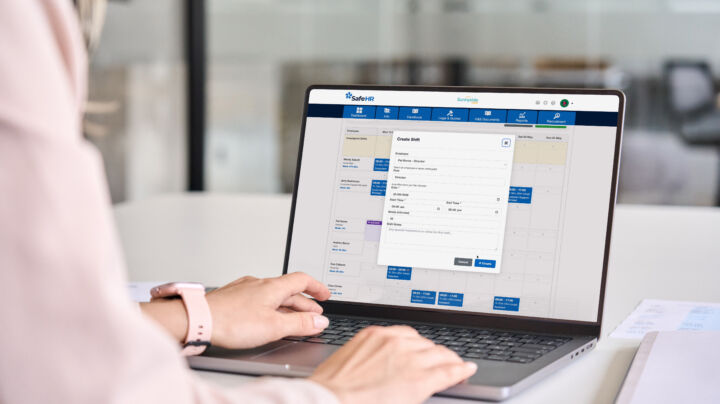
SafeHR supports organisations in embedding these foundations by bringing HR processes into one place, reducing inconsistency across teams and creating a more predictable and supportive employee experience.
Key areas of support include:
By strengthening these foundations, organisations can reduce uncertainty, identify risks sooner, and support managers to act with confidence. This leads to fewer misunderstandings, earlier intervention, and a more supportive working environment overall.
Improving psychological safety at work requires consistent and deliberate action. A strong starting point is to assess psychosocial risks to understand how they are affecting day-to-day work.
Practical steps include:
Small, consistent changes can have a significant impact. Over time, these actions help embed psychological safety into everyday ways of working rather than relying on one-off initiatives.
Hybrid working, digital transformation, and increasing performance expectations are reshaping how work is experienced, often in ways that can challenge wellbeing if not manged carefully.
While these changes offer flexibility, they also introduce new psychosocial risks, including:
Without clear structures and support, these challenges can begin to undermine psychological safety in the workplace. HR has an important role to play in leading a proactive approach that balances flexibility with wellbeing, helping ensure that new ways of working remain both sustainable and supportive.
Healthy workplaces do not happen by accident. They are designed through clear roles, effective management, and consistent systems.
Psychological safety cannot be treated as an optional extra. When it is built into everyday processes, it strengthens both employee wellbeing and organisational performance. When it isn’t, the risks don’t disappear, they grow.
For personalised advice and tailored HR solutions, contact us today and see how we can help your business thrive.

Related Insights